‘Farming’ with Harvester Example
This examples demonstrates ‘farming’ runs, that is, using a Harvester to perform and combine succesive, disjoint sets of runs.
First we define a simple trig function to explore and label with a Runner:
%config InlineBackend.figure_formats = ['svg']
import numpy as np

import xyzpy as xyz


def trig(f, x, amp, phi):

    trig_fn = getattr(np, f)
    err = 0.2 + 0.1 * np.random.randn()

    return amp * trig_fn(x - phi), err


r = xyz.Runner(trig, ["f(x)", "ef(x)"])
The harvester is composed of this Runner and logic for merging for saving each new set of runs.
h = xyz.Harvester(r, data_name="trig.h5")
We perform one set of runs first:
combos_1 = {
    "f": ["sin", "cos"],
    "x": np.linspace(-5, 5, 101),
    "amp": [1, 2, 3],
    "phi": [0.4, 0.8],
}
h.harvest_combos(combos_1)
100%|##########| 1212/1212 [00:00<00:00, 871954.79it/s]
Which we can plot:
fig, axs = h.full_ds.xyz.plot(
    x="x",
    y="f(x)",
    color="f",
    col="amp",
    row="phi",
    err="ef(x)",
)
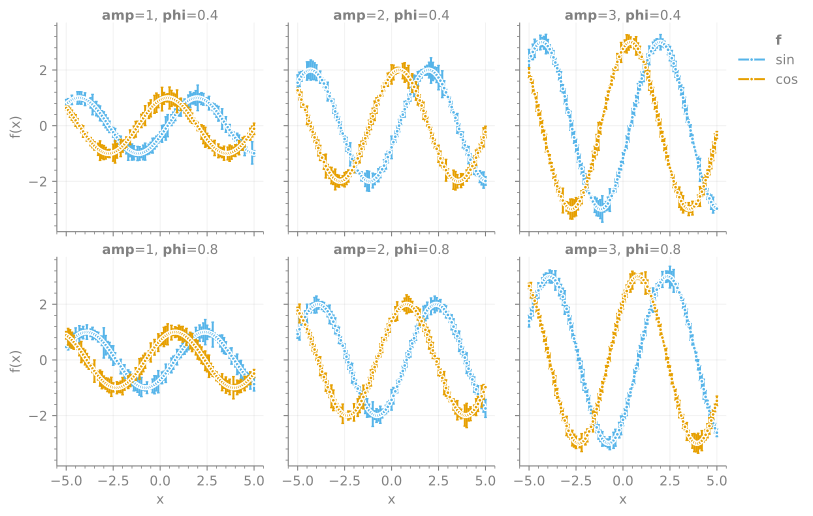
Then we can define and run a completely disjoint set of runs:
combos_2 = {
    "f": ["sin", "cos"],
    "x": np.linspace(-5, 5, 101),
    "amp": [4, 5],
    "phi": [1.2, 1.6],
}
h.harvest_combos(combos_2)
100%|##########| 808/808 [00:00<00:00, 283883.20it/s]
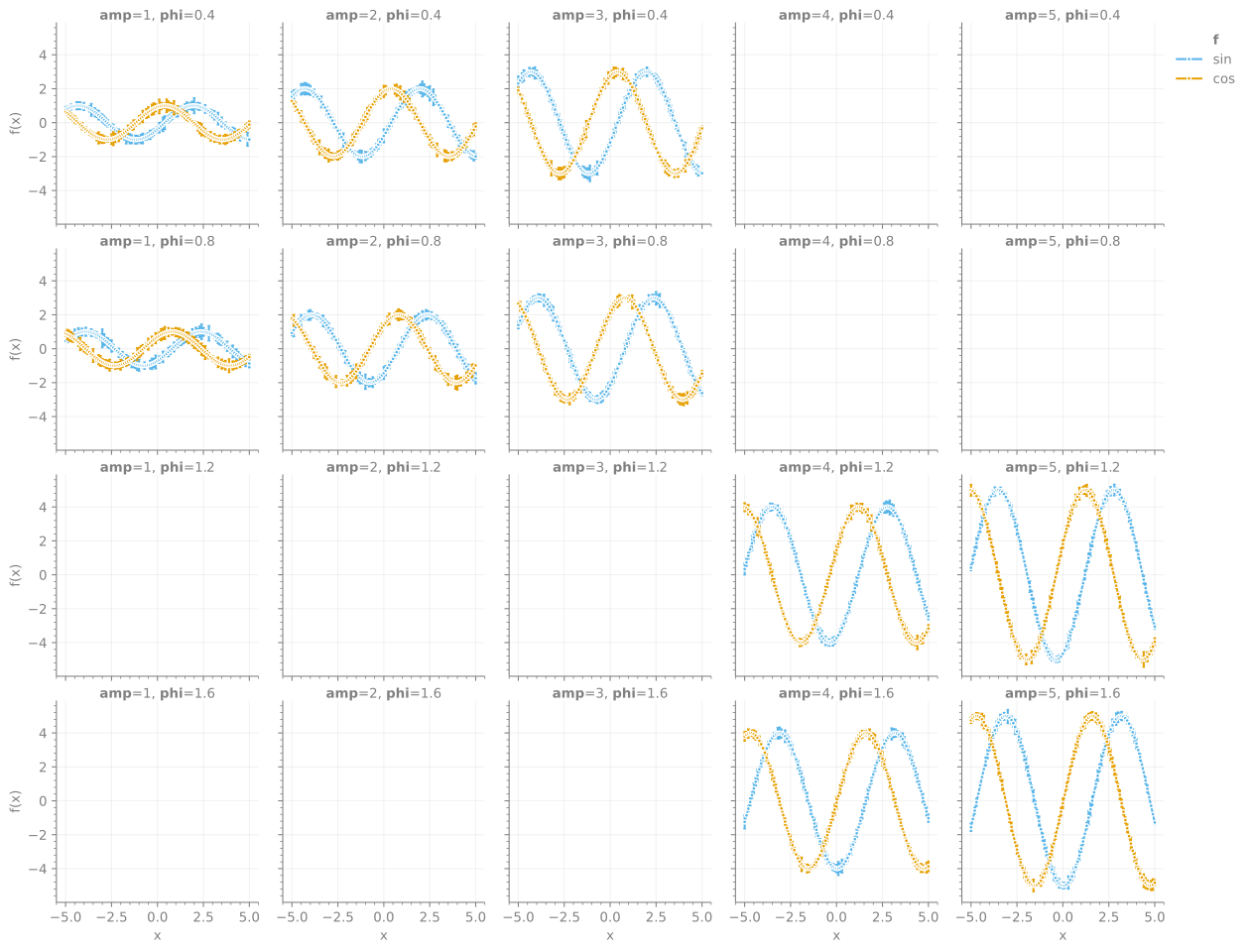
If we plot the current full_ds we’ll see both sets of runs are present, but there are also blank spaces:
fig, axs = h.full_ds.xyz.plot(
    x="x",
    y="f(x)",
    color="f",
    col="amp",
    row="phi",
    err="ef(x)",
)
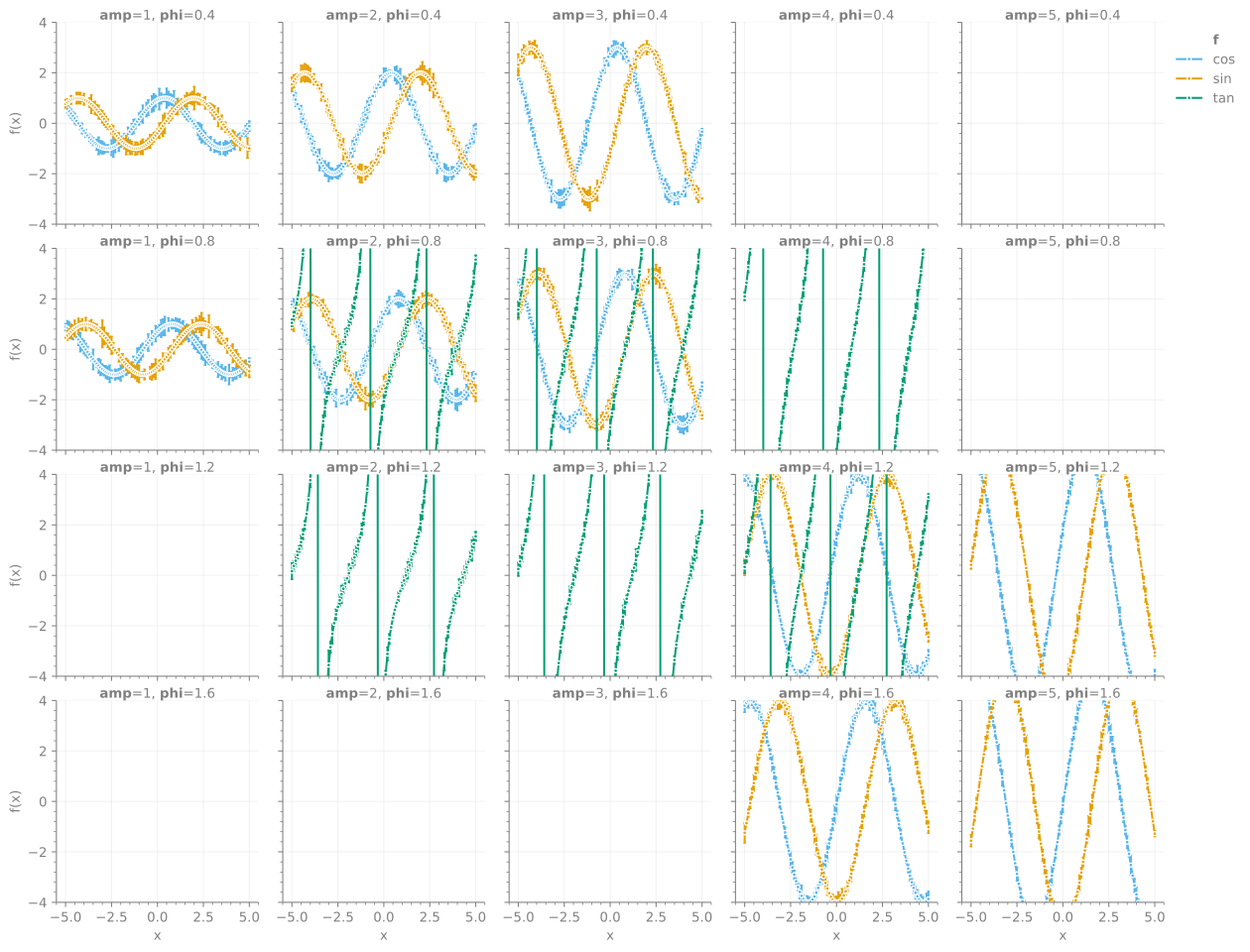
Finally let’s add tan into the mix, but only for the central combinations:
combos_3 = {
    "f": ["tan"],
    "x": np.linspace(-5, 5, 101),
    "amp": [2, 3, 4],
    "phi": [0.8, 1.2],
}
h.harvest_combos(combos_3)
100%|##########| 606/606 [00:00<00:00, 1130168.17it/s]
We’ll specify some plotting limits to avoid the infinities as well:
fig, axs = h.full_ds.xyz.plot(
    x="x",
    y="f(x)",
    color="f",
    col="amp",
    row="phi",
    err="ef(x)",
    ylim=(-4, 4),
)
All runs have also been accumulated into the on-disk:
!ls *.h5
trig.h5
xyz.load_ds("trig.h5")
<xarray.Dataset> Size: 98kB
Dimensions:  (f: 3, x: 101, amp: 5, phi: 4)
Coordinates:
  * f        (f) <U3 36B 'cos' 'sin' 'tan'
  * x        (x) float64 808B -5.0 -4.9 -4.8 -4.7 -4.6 ... 4.6 4.7 4.8 4.9 5.0
  * amp      (amp) int64 40B 1 2 3 4 5
  * phi      (phi) float64 32B 0.4 0.8 1.2 1.6
Data variables:
    f(x)     (f, x, amp, phi) float64 48kB 0.6347 0.8855 nan nan ... nan nan nan
ef(x) (f, x, amp, phi) float64 48kB 0.08426 0.1342 nan ... nan nan nanFor now just clean this up.
h.delete_ds()